Showing posts with label Fr. Paulo Ricardo. Show all posts

Friday, March 20, 2026

"The Path of Happiness and the Flame of Hope" by Fr. Paulo Ricardo.

 You can reand or listen the original source (in Portuguese) here.

1 February 2026

Far from being a mere display of Jesus’ eloquence, the Beatitudes constitute a true itinerary that leads us to Heaven. This is because the complete happiness we constantly seek is found in nothing of this world, but solely in God.


Helen Thomas Robson - My Friend.

The Gospel of Our Lord Jesus Christ according to Saint Matthew (Mt 5:1–12a)

At that time, when Jesus saw the crowds, He went up the mountain and sat down. His disciples came to Him, and He began to teach them, saying:

“Blessed are the poor in spirit, for theirs is the Kingdom of Heaven.

Blessed are those who mourn, for they shall be comforted.

Blessed are the meek, for they shall inherit the earth.

Blessed are those who hunger and thirst for righteousness, for they shall be satisfied.

Blessed are the merciful, for they shall obtain mercy.

Blessed are the pure of heart, for they shall see God.

Blessed are the peacemakers, for they shall be called children of God.

Blessed are those who are persecuted for righteousness’ sake, for theirs is the Kingdom of Heaven.

Blessed are you when people insult you and persecute you, and utter every kind of evil against you falsely on My account. Rejoice and be glad, for your reward will be great in Heaven.”


This Sunday, the Church proclaims the Gospel of Saint Matthew, chapter 5, verses 1 to 12. This passage is the Sermon on the Mount—the first of the five great discourses narrated by Saint Matthew—in which Our Lord proclaims the Beatitudes that we shall live fully in Heaven.

It is striking to observe that Jesus’ very first word here is “blessed,” that is, “happy.” It seems that Christ begins with the end, for He opens by speaking of the ultimate goal of our lives—happiness—and shows that He Himself is the path that leads to it. We all desire to be happy, yet we tragically do not know the way to happiness. This drama belongs to the human condition. Cows, monkeys, and small animals do not suffer from the anguish of seeking fulfillment in life; they do not become anxious, worried, or desperate. With us, however, the situation is different: we are anguished because there is always the possibility that our life might simply not turn out well.

Here, Jesus immediately touches the wound, showing us that we seek happiness where it cannot be found. Because He desires our happiness, Christ shows us the way. The hard truth is that we can indeed fail in this life, and this is precisely the evil Jesus wishes to heal. Happiness exists in Heaven, with God; yet we do not know how to reach it. Our Lord not only wants us to be happy, but also tells us what we must do in order to attain happiness. This is the very heart of the Gospel of the Beatitudes.

In short, we will not find perfect happiness in this world. Every form of happiness presented by Jesus is a reward of Heaven. And to reach it, we must do one thing: imitate Our Lord. With the help of grace, we must form our hearts according to the Heart of Jesus, for the Beatitudes are nothing other than a reflection of the very Person of Christ. As He Himself said, “I am the way, the truth, and the life. No one comes to the Father except through Me” (Jn 14:6).

The Gospel presents us with eight Beatitudes, divided into two parts: in the first, Jesus tells us what we must do; in the second, He reveals the reward awaiting us in Heaven. It is important to emphasize that everything Jesus promises belongs to Heaven. Indeed, He begins by saying, “Blessed are the poor in spirit, for theirs is the Kingdom of Heaven.” He goes on to speak of comfort for those who mourn, inheritance for the meek, satisfaction for the hungry and thirsty, mercy, and finally divine filiation. All of this stands in stark contrast to this valley of tears in which we live—the fallen world.

In the Beatitudes, Jesus speaks to us of Heaven, where we shall be called “children of God.” Saint John writes: “Beloved, we are God’s children now; what we shall be has not yet been revealed” (1 Jn 3:2). This is the hope of Heaven. Finally, Jesus speaks of those who are persecuted for love of Him: “Blessed are you when people insult you and persecute you, and utter every kind of evil against you falsely on My account. Rejoice and be glad, for your reward will be great in Heaven” (Mt 5:11–12). Everything points toward Paradise.

Christ wishes to free us from the foolish notions of happiness we cultivate in this world. He says, “Blessed are the poor in spirit.” Jesus Himself was the first and greatest of the poor in spirit, for He humbled Himself completely on the Cross, shattering by His example our attachments to worldly things. It is noteworthy that He says “blessed are the poor,” even though common sense often claims the opposite. Our country is economically unstable; we are constantly facing crises. As a result, it is common for us to chase after money and financial security. It almost seems as though happiness will only arrive once our name disappears from the list of debtors or when we finally purchase the latest smartphone. Yet one does not even need faith to recognize the illusion behind this attachment to money—a truth already acknowledged by ancient philosophers.

Once, I met an elderly man who had lived a dignified and honest life, working for decades to provide the best for his family. At the end of his life, however, he realized that all the money he had accumulated could not buy his health back. Material goods do not bring happiness. But must one really live to be eighty to discover a truth that could already be understood at twenty? It makes no sense to distress ourselves over things that will pass away. Christ invites us to imitate Him in poverty, for it is in this way that we shall be happy.

Does this mean, then, that we will experience no happiness at all in this life? Certainly not. The Beatitudes themselves make this clear. When we hear about true happiness in Heaven and what we must do to attain it, hope is born in our hearts—and hope itself is already the beginning of happiness. When someone who is gravely ill is told that there exists a medicine capable of saving his life, simply hearing this good news already brings joy. The illness remains, but the face is illuminated by hope. Such is the logic of the Beatitudes proclaimed by Jesus. We shall live them fully only in Heaven, but even now we possess the joy of hope, because we believe in the Word of God.

We must obey the Lord, following the path to happiness that He has shown us. To help us, we have the grace of God. We are like the disciples on the road to Emmaus, walking in the company of Jesus: “Were not our hearts burning within us while He spoke to us on the way?” (Lk 24:32). They had not yet seen the risen Christ, yet their hearts were already aflame. Such is the condition of Christians.

Let us look to the lives of the saints. They are rightly called “blessed,” for they are in Heaven, though they lived troubled lives on earth. Indeed, if we wish to understand suffering, we need only look at the saints. Yet even amid suffering, they nourished the flame of hope in their hearts, and this was already a source of great joy—even in this world. We are called to suffer not as the despairing, but with the flame of hope burning within our souls.

So far, we have seen our goal—Heaven. But how do we reach it? The path that leads to Paradise begins with poverty of spirit, that is, the wise resolve never to place our hope in earthly goods: “Blessed are the poor in spirit.”

Second: “Blessed are those who mourn.” Our society flees from any form of suffering or affliction and believes that happiness lies in sensual pleasure. For many, happiness is found in sex, food, comfort, and the like. This is a grave illusion. Jesus is clear: happiness does not lie in what appeals to disordered desire.

The third Beatitude of Our Lord is: “Blessed are the meek.” How many wars, conflicts, and disputes would be avoided if we simply followed this exhortation of the Lord.

According to Saint Thomas Aquinas, these Beatitudes are proper to beginners—those taking their first steps on the path of purification. Even at this early stage, we already begin to lose much of our attachment to the things of this world.

Therefore, let us take courage! Our Lord begins the Sermon on the Mount with the end, showing us that true happiness does exist. Hearts lifted high, then! How many priests and members of the Church live discouraged lives! How many people surrender to a worldly outlook because they no longer see a solution to the problems afflicting the Church! Sadly, in the face of worldly pressures, many prefer to capitulate, wishing the Church to adapt itself to the spirit of the age. Yet here Christ feeds us with hope. He shows us the path of grace, by which—if we break with worldly illusions—we shall receive our reward in Heaven.

Let us, then, have true hope. Yes, we live the drama of the human condition, but authentic happiness does exist. A light has shone upon a people who walked in darkness. Our true happiness is in Heaven. To reach it, let us ask for the grace to imitate Christ in the Beatitudes, thus breaking free from the illusions of this world. In this way, we may one day attain the eternal reward. Therefore, let us listen to Our Lord, who says: “Rejoice and be glad, for your reward will be great in Heaven” (Mt 5:12a).

Friday, March 21, 2025

Sermon of Fr. Paulo Ricardo on the Solemnity of St. Joseph (translated into English)

March 19, 2020

“Joseph, Son of David, do not be afraid to take Mary as your wife, for she has conceived by the Holy Spirit.”


Gospel of Our Lord Jesus Christ according to St. Matthew (Mt 1:16, 18-21, 24a)

      Jacob was the father of Joseph, the husband of Mary, of whom Jesus was born, who is called the Christ. The origin of Jesus Christ was as follows: Mary, his mother, was betrothed to Joseph, and before they came together, she was found to be with child by the Holy Spirit. Joseph, her husband, being a just man and unwilling to put her to shame, resolved to divorce her secretly. But as he considered this, behold, an angel of the Lord appeared to him in a dream, saying, “Joseph, son of David, do not be afraid to take Mary as your wife, for that which is conceived in her is of the Holy Spirit. She will bear a son, and you shall call his name Jesus, for he will save his people from their sins.” When Joseph woke from sleep, he did as the angel of the Lord commanded him.


In a year of so many tribulations for the whole world, struck by punishments that humble human pride, while at the same time seeking the mercy of the Father as the remedy for our faults, God grants us, in His special providence, the glory of St. Joseph, proclaimed 150 years ago as the patron of the universal Church. Though the virtues, titles, and invocations under which we can delve deeper into the mystery of this singular holiness are countless, we wish to focus today on that grace, superior to all others, which is the reason for St. Joseph's being and the fundamental reason why the Church venerates him as the first of saints and her most powerful intercessor. We refer, of course, to the mission that was assigned to him from eternity and for which he received all the virtues we admire in him: piety, virginity, prudence, and fidelity. And what mission could this be, if not to be the spouse of the Mother of God and the adoptive father of the Incarnate Son? Indeed, this was the very purpose for which the Holy Trinity predestined him in her eternal counsels; it was for the head of the Holy Family that the Father of all fatherhood conceived him; it was to be the zealous custodian, in preference to all the righteous, that the Divine Word formed him, and to be the chaste guardian of the Immaculate Virgin that the Holy Spirit sanctified him. So tightly bound are St. Joseph's plans to Christ and Our Lady that we can say that, in the same decree by which God determined to regenerate humanity through the Incarnation of His Son, not only was the Blessed Virgin included, but also St. Joseph, the one to whom the Word would take flesh. Because in the same act of will by which God wished to give mankind the remedy of salvation through Christ's Blood, He also wished that the woman from whom He would be born would be united in sacred matrimony to a righteous man prepared for such a high mission: “The angel Gabriel was sent by God to a city of Galilee named Nazareth, to a virgin betrothed to a man whose name was Joseph” (Luke 1:27). This is why many theologians affirm that St. Joseph belongs not only to the order of grace, where all other saints belong, but also to the order of the hypostatic union, although in an extrinsic, moral, and mediated manner, inferior to that which corresponds to the Virgin Mary. St. Joseph, in fact, did not physically cooperate in the Incarnation of the Word, and it is for this reason that his dignity and the worship due to him are inferior to that of the Mother of God. However, even though Joseph's participation in the hypostatic order is confined to the sphere of moral causes, as the guardian of Mary's honor and virginity and the custodian of the Child Jesus, his role as a father, in terms of conjugal rights and moral authority, is no less true, as the Scripture attests: “His father and mother marveled at what was said about him” (Luke 2:33), and as the Virgin herself acknowledges: “Behold, your father and I have been searching for you” (Luke 2:48). Just as Mary, the Mother of the Head who is Christ, can be said to be—and indeed is—the Mother of the Church, so too St. Joseph, the adoptive and virginal father of Christ, can be said to be—and indeed is—the spiritual father of the entire Catholic Church, triumphant, suffering, and militant. It is with our hearts focused on such a mystery, with our spirits comforted by having such a father and most provident protector, that we must invoke the help and patronage of St. Joseph, so that he may deliver us from the evils of these sorrowful times, if it be God's will, and grant us that peace and health that the world is always incapable of providing. — St. Joseph, protector of the Holy Church, pray for us!


References:

Cf. Pius IX, Decree “Quemadmodum Deus,” Dec. 8, 1870.

The text of this homily is inspired by some ideas from Fr. R. Garrigou-Lagrange, “De præstantia sancti Ioseph inter omnes sanctos,” in: Angelicum (V/2), April-June 1928, pp. 205-208.


 Sorce:

https://padrepauloricardo.org/episodios/solenidade-de-sao-jose-mmxx

Friday, February 7, 2025

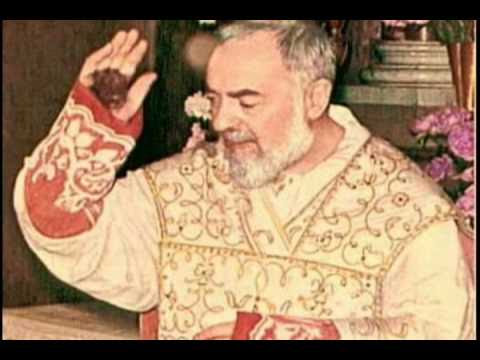
"The Bilocations of Padre Pio" by Fr. Paulo Ricardo


In this lesson, Father Paulo Ricardo talks about the extraordinary phenomenon of bilocation, experienced by great men and women from the past, but also by Padre Pio in the 20th century.


            As an addendum to the course on Padre Pio, we will discuss an extraordinary phenomenon that occurred many times throughout the life of this saint, and which is attested by numerous witnesses: bilocation. What is the nature of this phenomenon? Why does God allow it? What are the possible explanations?

Some Cases of Padre Pio’s Bilocation

Let us begin by narrating some well-documented cases of Padre Pio’s bilocation.

The first occurred in 1905, when he was still not a priest. He was in the seminary in southern Italy when, suddenly, he found himself in a mansion in Udine, in the northern part of the country. Before him, two extremes of life: a father was dying at the very moment his daughter was being born. The girl, named Giovanna Rizzani, would later become his spiritual daughter. Our Lady was presenting her to him, entrusting her to his care. She was a rough jewel that the saint would eventually refine.

One of Padre Pio’s confreres, Father Alberto D’Apolito, recounts some interesting details of this story, details that I have not found elsewhere. He says that the dying father, who was the girl's father, was a Freemason, and that his fellow Masons were waiting outside his room, ensuring that no Catholic priest would enter to perform the funeral rites as his wife had requested.

The fact is that, suddenly, his pregnant wife saw a friar passing by. Startled, she called one of the servants and asked who had let him in. The servant replied that no friar had entered. A little while later—due to the shock—the woman started having contractions, and the baby was born. The child was fragile, given the circumstances. Then, the mother asked for a priest to baptize the baby, and the Masons allowed him to enter. Seizing the opportunity, the priest also attended to the dying man, giving him the Sacrament of the Anointing of the Sick. According to the account, the man died saying, “My God, have mercy! My God, have mercy!”

Years later, this same Giovanna, now 17 years old, was in St. Peter’s Basilica in Rome, where her mother had moved, when she began to have doubts about the Holy Trinity. Distressed, she found a Capuchin friar in the church, asked to speak with him, and they went to the confessional. There, the man, using examples and metaphors, addressed her concerns, and she left very grateful. She then asked her friend to wait while she thanked the friar again. They waited, but after a while, nothing happened. Eventually, the church custodian, the “sanpietrino,” came by and told them it was time to close. The girls then asked about the Capuchin friar, and the custodian went to the confessional. When he returned, he said there was no friar there. The church was empty, except for the two girls.

The following year, Giovanna heard about Padre Pio and went to visit him at the convent. Upon meeting her, the saint exclaimed, “I’ve been waiting for you for so many years!” She replied that it might be a mistake, as they had never met before. Padre Pio then responded, “I was there when your father died and you were born.”

Some might wonder if these stories are nothing more than urban legends, products of popular credulity. The question is not without merit, for indeed, many legends have been invented around Padre Pio. In one of them, which I myself believed until recently, it was said that, by bilocation, Padre Pio had met Don Orione, another saint, during the beatification ceremony of St. Therese in St. Peter’s Basilica. According to the story, Padre Pio appeared in the temple, walking with arms open toward Don Orione, disappearing when the latter approached to greet him.

However, while preparing this lesson, I came across a seemingly legitimate document in which Don Orione himself denies the story. It is important to note that Don Orione held Padre Pio’s sanctity in great regard. In fact, one time, a man, a breadwinner for his family, came to him complaining of a paralyzed arm. Don Orione told him that he did not perform such miracles and suggested that he go to Padre Pio. The man did so, and he was indeed cured. In other words, Don Orione did not deny the bilocation episode due to disbelief in the phenomenon, as if it were impossible. He denied it simply because it did not happen; it was a legend.

Conclusion: Not everything said about a saint is true. But the fact that there are legends does not mean that everything else is a lie. Each case must be evaluated carefully, with patience and good will. And to evaluate the miracles involving Padre Pio, including the bilocations, we fortunately have a very reliable source: the saint himself.

In the book Padre Pio Under Investigation: The "Secret Autobiography", by Francesco Castelli, all the documentation of the first apostolic visit to Padre Pio, made by Monsignor Raffaelo Rossi in 1921—only three years after his stigmatization—is presented. On the third day of the inquiry, June 16, he questioned the saint about the alleged bilocation cases. It is worth noting that, in the report, he made sure to highlight the virtues of the friar during the session. Padre Pio seemed, at all times, very serene and candid. Sometimes, even with a childlike frankness. Let us follow the dialogue:

He is also asked about bilocations. What does he say about that?


Q: What can you tell us about bilocations?

A: I don’t know how or of what nature it is, and even less do I give it much importance... but I became aware of this or that person, this or that place; I don’t know if the mind is transported there, or if some representation of the place or person appeared to me; I don’t know if I was present with my body or without it.

In other words, Padre Pio clearly admits that bilocations do happen. The inquisitor then cites some specific cases:


Q: Did you realize when such a state began, and then noticed when you returned to normal?

A: Usually, it happens while I am praying, my attention is first directed to the prayer and then to the representation; and suddenly, I find myself back to where I was before.


Q: Could you share some specific facts?

A: Once, at night, I found myself by the bedside of a sick woman: Mrs. Maria, from San Giovanni Rotondo. I was in the convent, I believe I was praying. It must have been more than a year ago. I spoke words of comfort to her; she asked me to pray for her healing. That’s essentially it. Personally, I did not know this person; she had been recommended to me.

He continues, narrating another episode:

A: A man (for discretion, Padre Pio does not give the name) was presented to me, or I appeared to him, in Torre Maggiore—while I was in the convent—and I rebuked him and criticized him for his vices, urging him to convert, and later, that man came here. I believe there were other cases; but these are the ones I remember.


Q: Did you tell anyone about these supposed cases of bilocation?

A: No, not at all. This is the first time I’ve reported them in these terms. It seems that I didn’t even tell my spiritual director, because I never felt confused about it. These people spoke to me about it, but I remained reserved; I neither denied nor confirmed it.


Years later, when Padre Pio was censured by the Holy Office—not due to this apostolic visit, but because of the persecutions and calumnies coming from the Archdiocese of Manfredonia and the controversial (to say the least) report by Father Gemelli—he was without external communication. His spiritual director, Father Agostino of San Marco in Lamis, went to visit him. Father Agostino recounted that he had been in Florence for the profession of a religious sister. While there, he heard that Padre Pio had also been in the city by bilocation. Taking the opportunity, the man, to whom the saint owed obedience, asked: “How often do you travel to Florence?” The friar answered him only with a smile. Father Agostino then narrated the story he had been told and asked if it was true. Padre Pio humbly confirmed: “Yes, Father.”

Father Agostino continued: “But the sister said she asked you to visit Sister Benjamina as well, and you answered her, ‘I don’t have that obedience.’”

This means that the bilocation occurred with a sort of divine mandate—it was an obedience to God's will. In this specific case, God wanted Padre Pio to console this particular nun, not another one. Father Agostino asked if the dialogue was true, and the saint confirmed.

It is important to note that these are very direct and reliable witnesses. This is similar to the famous bilocation of St. Alphonsus Maria de Liguori, as Royo Marín recounts in his Theology of Christian Perfection. It is said that on September 21, 1774, Bishop Alphonsus, having celebrated Mass in a small parish of his diocese, collapsed into an armchair and remained catatonic for two days. Those who saw him were desperate, except for one priest, who prudently advised that they leave the saint as he was. After two days, a bell rang: it was the man waking up, asking what had happened. When they told him about the “blackout,” St. Alphonsus responded: “You—said the servant of God—believe I was sleeping, but you do not know that I went to Rome to assist the Pope, who just died.” It was the death of Clement XIV.

The rumor spread throughout the city, and days later, news from Rome confirmed the event: the Pope had indeed died on the day and at the hour indicated by St. Alphonsus. This is a story corroborated by multiple witnesses.

Therefore, the first thing to conclude is that the phenomenon of bilocation really occurs in the lives of some saints, and there are numerous reliable testimonies of it. Now, it is necessary to understand the nature of bilocation.

Let us start with the following question: How do the saints describe bilocation? As we saw in Padre Pio’s account, the common experience is that the person’s real physical body remains in the place of origin, in a somewhat robotic activity or in a sleep-like state. Meanwhile, in the destination place—this is what they say—something appears that takes the form of the bilocated body.


Q: Is it the body that is in two places at once?

A: Thomistic answer: That is contradictory and impossible. It is not possible for a circumscribed body to be in two places at the same time. It is surprising that some Church doctors, such as St. Robert Bellarmine, or wise philosophers, like Suárez and Francelin, hold the absurd and unacceptable opinion that the real, solid body actually appears in two places at once. This does not make sense.


Let us then describe the phenomenon to see if its nature becomes clearer—and the impossibility of this body duplication.

We have seen that, generally, one’s body remains in one place, and at the destination, something else appears, which is not the real body. This is known through a series of observations. There was a case where Padre Pio appeared to a doctor in Rome—who had no faith. The man had been called to attend a patient during the night. Suddenly, while driving, a friar appeared in the passenger seat. The religious man described the situation of the patient, predicted the procedure the doctor would attempt, and warned him not to use it, as it would not work, clearly indicating what he should do instead. The doctor, skeptical and thinking he was delirious, reached out to touch the seat but felt nothing.

In this case, it was an ethereal, immaterial reality. There was a presence that spoke and acted, but it had no body. In this case, the real body remained in San Giovanni Rotondo, but even with the body there, the saint was acting, locally, in another place, through a phenomenon of appearance that we cannot explain exactly. Theological theories are numerous—such as the condensation of air with the help of angels—but it’s not relevant for us to delve into such details.

What is certain is that, in many cases, the person seen is somewhat evanescent. In other cases, the apparition acts physically, as in the case where Padre Pio appeared to a sick confrere in a hospital in Foggia. He told the man that he would recover from his condition and left the mark of his hand on the glass. When the friar realized it, he saw the mark on the glass and understood that it wasn’t a dream, that Padre Pio had indeed been there. Soon after, a friar arrived in San Giovanni Rotondo and informed Padre Pio of the stir caused by the confrere’s testimony, who swore that he had received a visit from the holy brother. Padre Pio responded with a question: “And you doubt?”

Another time, Padre Pio had admonished Giovanna Rizzani, that same girl, because the young woman, out of scruples, kept confessing sins that had already been forgiven. The saint forbade her from doing this, warning that if she repeated it, he would slap her. Sure enough, the young woman was outside of San Giovanni Rotondo and, again due to scruples, began confessing nonexistent sins. She received absolution, and as she rose to fulfill the penances, she was given a slap so loud that the confessor, startled, opened the curtain to see the source of the noise.

There is also the case, which we discussed in the course, of the industrialist who was at Mass in northern Italy and had the distinct impression that the celebrant was Padre Pio. Puzzled, he went to the sacristy afterward and, magically, the priest was not at all like the friar. The man then decided to go to San Giovanni Rotondo. Upon arriving there, Padre Pio, always in good humor, asked: “Did you need me to go and find you this time?” When this same man was driving home at night, nodding off at the wheel, he suddenly felt a punch in the stomach. He woke with pain, braked abruptly, and just ahead of him, a train was speeding by. Alarmed, the man returned to the convent to spend the night, and the next day, he went to see Padre Pio, who told him: “Well, don’t you know you can’t drive in that condition?”

From a philosophical point of view, we can say there are two forms of presence. The first, the normal one, is the circumscriptive presence. The being, in its corporeal quantity, is in a specific place (ubi) in space. But it is also possible to be present through action. Spiritual realities can be present in one place while acting in another. And, in that other place, by miracle, divine intervention, something like an apparition occurs—an apparition, either evanescent or concrete, which may even perform physical acts.

Leonardo Penitente philosophically points out this distinction of presence: “The mode of presence of incorporeal beings—like angelic natures and souls, for example—is not circumscriptive, or it is also called definitive presence.”


Conclusion

It is clear that bilocation is a very complex phenomenon. There are various ways to explain it, and in seeing this variety, we should give glory to God. God's love has no limits. He does everything for our good. For our sake, He even revokes the limits of space and allows His saints, being in one place, to act concretely in another, advising, comforting, correcting, preventing deaths. So many are the wonders of God! The saint bilocates, but it is God, the creative, salvific, and loving presence, in all places.

In the face of these mysteries, let us ask, as the psalmist does: “Where can I go? Where can I flee?” For God, there is no place. His love knows no boundaries.


References

          Padre Agostino da San Marco in Lamis, Diario. 3rd ed. San Giovanni Rotondo: Edizioni Padre Pio da Pietrelcina, 2012.

          Francesco Castelli, Padre Pio sob investigação: a “autobiografia” secreta. Translated by Paulinas (Lisbon). 3rd ed. Lisbon: Paulinas, 2012.

          Alexis Lépicier, O Mundo Invisível. São Paulo: Molokai, 2019.

          Leonardo Penitente, Bilocação: sua possibilidade, natureza, conceito e os casos reais rigorosamente documentados. Campinas: Ecclesiae, 2019.

          Antonio Royo Marín, Teología de la perfección Cristiana. BAC: Madrid, 1954.

          Solignac, A., “Multilocation,” in: AA.VV., Dictionnaire de Spiritualité. vol. 10, coll. 1837–1840. Paris: Beauchesne, 1980.


Notes

1.         The document is from a website of postulants for the beatification cause of Dom Orione.

2.         At the time, they presented him with a book by journalist Alberto Del Fante, who, from an atheist, became a devout propagator of devotion to Padre Pio.

3.         Francesco Castelli, Padre Pio sob investigação: a “autobiografia” secreta. Translated by Paulinas (Lisbon). 3rd ed. Lisbon: Paulinas, 2012.

4.         A Discalced Carmelite friar who at the time was a bishop and later made a cardinal.

5.         Francesco Castelli, Padre Pio sob investigação: a “autobiografia” secreta. Translated by Paulinas (Lisbon). 3rd ed. Lisbon: Paulinas, 2012, p. 264.

6.         Ibidem, p. 264.

7.         Ibidem, p. 264-265.

8.         Padre Agostino da San Marco in Lamis, Diario. 3rd ed. San Giovanni Rotondo: Edizioni Padre Pio da Pietrelcina, 2012, p. 94.

9.         Bibliographic suggestions: For a deep yet summarized treatment, read the book Teología de la Perfección Cristiana, by Royo Marín, starting at page 846. For a broader research with very interesting results, I recommend the book: Bilocação: sua possibilidade, natureza, conceito e os casos reais rigorosamente documentados, by Leonardo Penitente, published by Ecclesiae.

10.       Leonardo Penitente, Bilocação: sua possibilidade, natureza, conceito e os casos reais rigorosamente documentados. Campinas: Ecclesiae, 2019.

11.       For example, the famous Dictionnaire de Spiritualité, in volume 10, from column 1873, contains an article by E. M. Solignac about multilocation. There, the author addresses the problem of historical sources and shows that many miracles attributed to this or that saint seemed not to be true.

12.       Alexis Lépicier, O Mundo Invisível. São Paulo: Molokai, 2019, p. 106.

Source: https://padrepauloricardo.org/episodios/as-bilocacoes-do-padre-pio